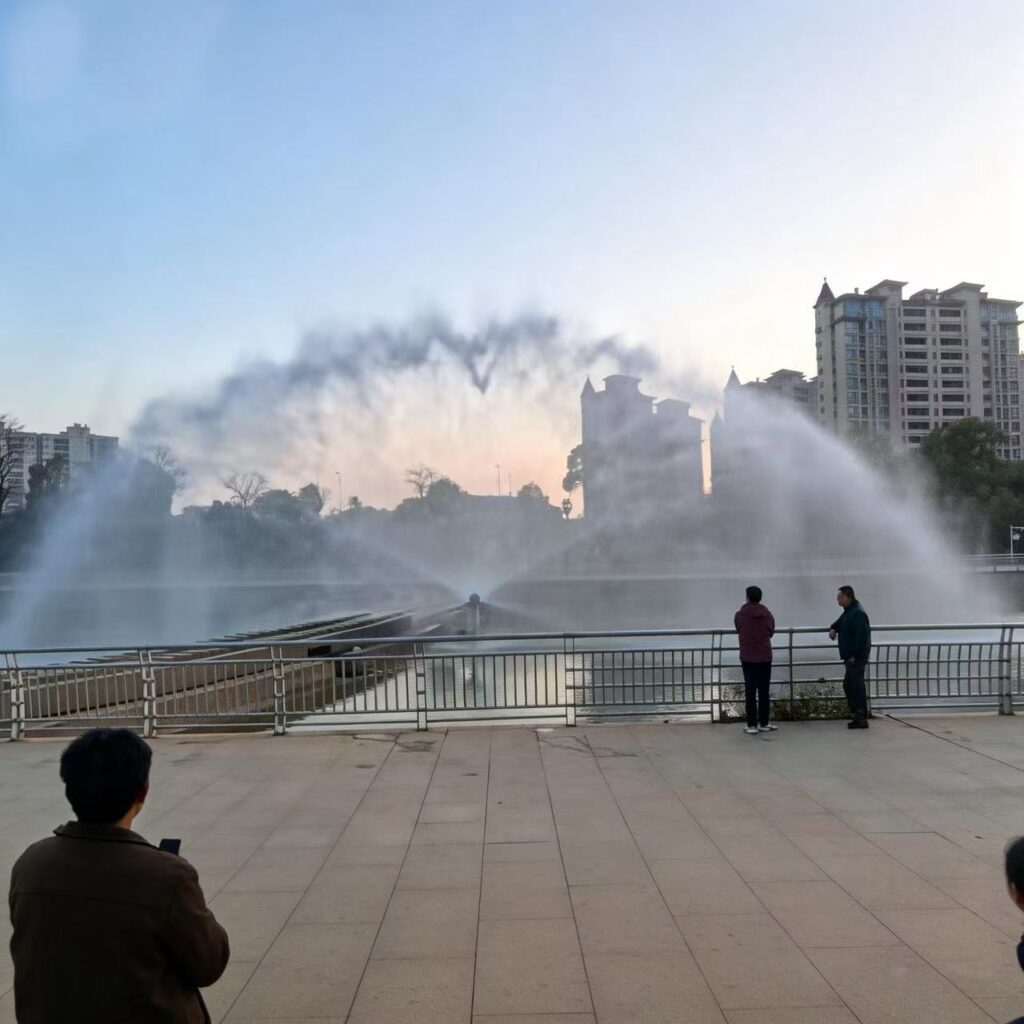
Located 200 meters upstream from the bridge, at the “Fish-Scale Weir,” we have installed a water-screen projection system. This installation generates a high-definition water screen measuring 18 meters in width and 6 meters in height directly upon the river’s surface, powered by an array of four 20,000-lumen professional-grade projectors.
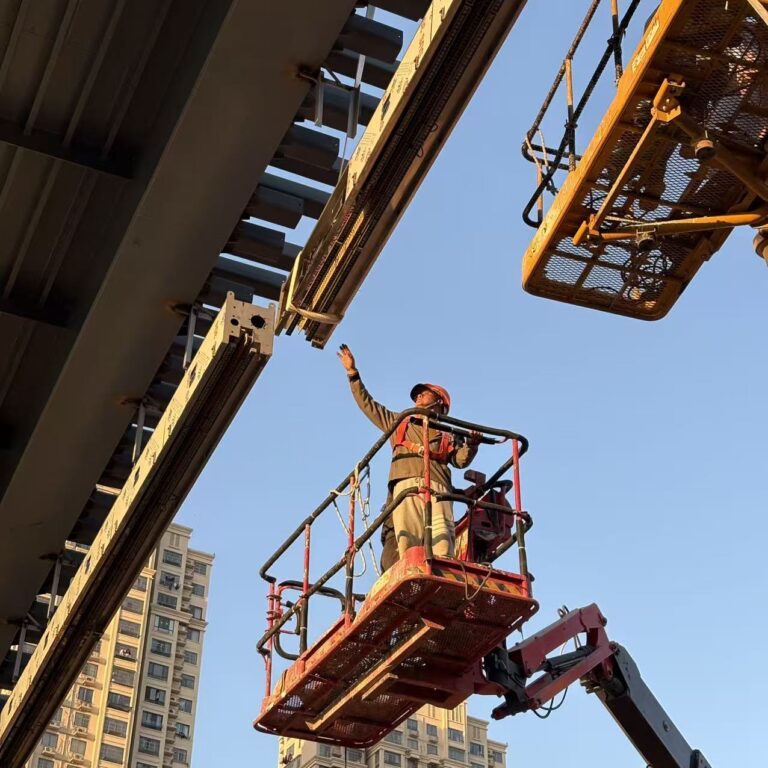
Beneath the bridge, we have constructed an ecological water-curtain fountain matrix. Fully anticipating the potential turbidity of the river water, we installed a 4×8-meter filtration tank directly beneath the bridge structure. This system filters the river water before channeling it into the water curtains, thereby significantly extending the equipment’s service life and ensuring the purity of the circulating water. Furthermore, the filtration tank is equipped with automated electric valves; once the cleaning schedule is configured, no manual intervention is required to initiate the cleaning process.
The Lighting Art Bridge
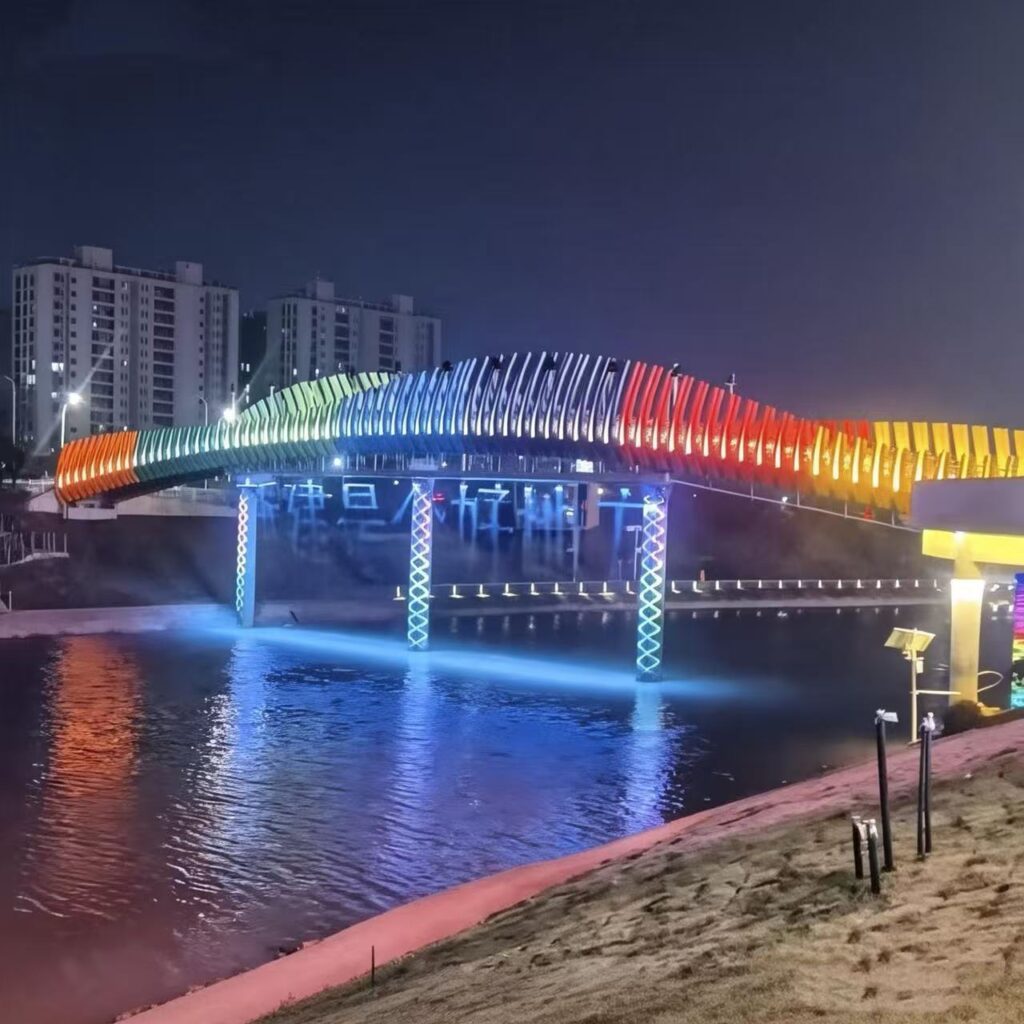
The bridge’s primary structure features a steel framework characterized by a segmented, rainbow-hued color scheme. Laser projectors, positioned on both riverbanks, precisely illuminate the bridge’s 128 curved steel ribs. At the apex, 20 beam lights project multidimensional patterns that synchronize with musical rhythms, thereby heightening the immersive sensory experience. Utilizing a DMX512 control system, lighting modes can be instantly switched with a single command to reflect specific holidays or seasonal transitions.
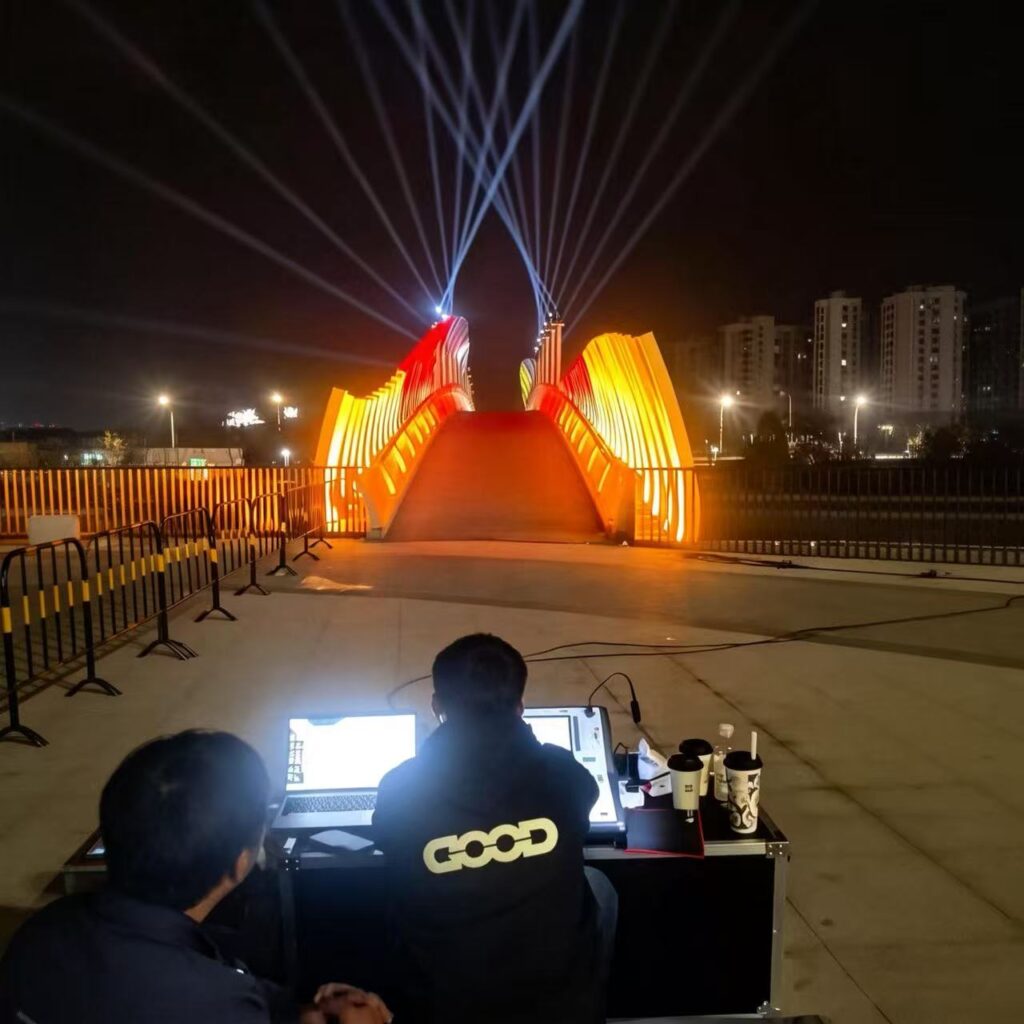
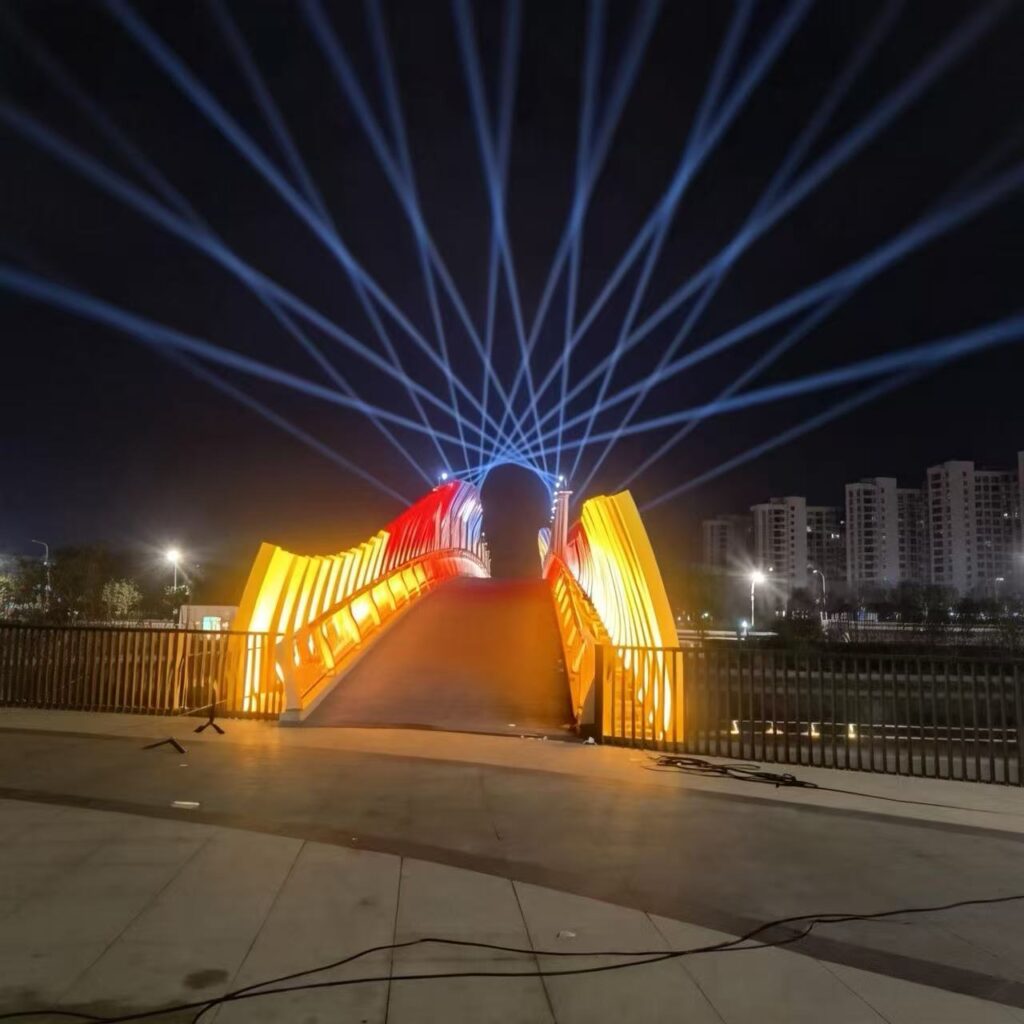
This “Dream Bridge”—enveloped in a mesmerizing interplay of light, shadow, and mist—is the newly constructed waterfront landscape project at Shuiyue City, meticulously crafted by our team. By seamlessly integrating lighting artistry, water curtain technology, and natural ecology, we have presented the citizens of Nanchang with an immersive, all-day urban waterfront spectacle.
During the construction phase, we faced three major challenges. The first was the absolute necessity of ensuring that all equipment installed above the water body functioned flawlessly upon completion. This was critical because, once the project was finished, the surrounding paving would be laid—leaving the water body intact—meaning that any subsequent rework would result in significant delays. The second challenge stemmed from the river channel’s winding, S-shaped course; we strove to maximize the viewing experience, ensuring that spectators could enjoy the performance from a wide variety of vantage points. Finally, given the rapid flow of the water, we had to ensure that the water curtain structure—positioned upstream—would neither obstruct the water flow nor disrupt the downstream ecosystem.
Through the collaborative efforts of every team involved, we successfully completed this entire project, achieving satisfaction for both our client and the general public.