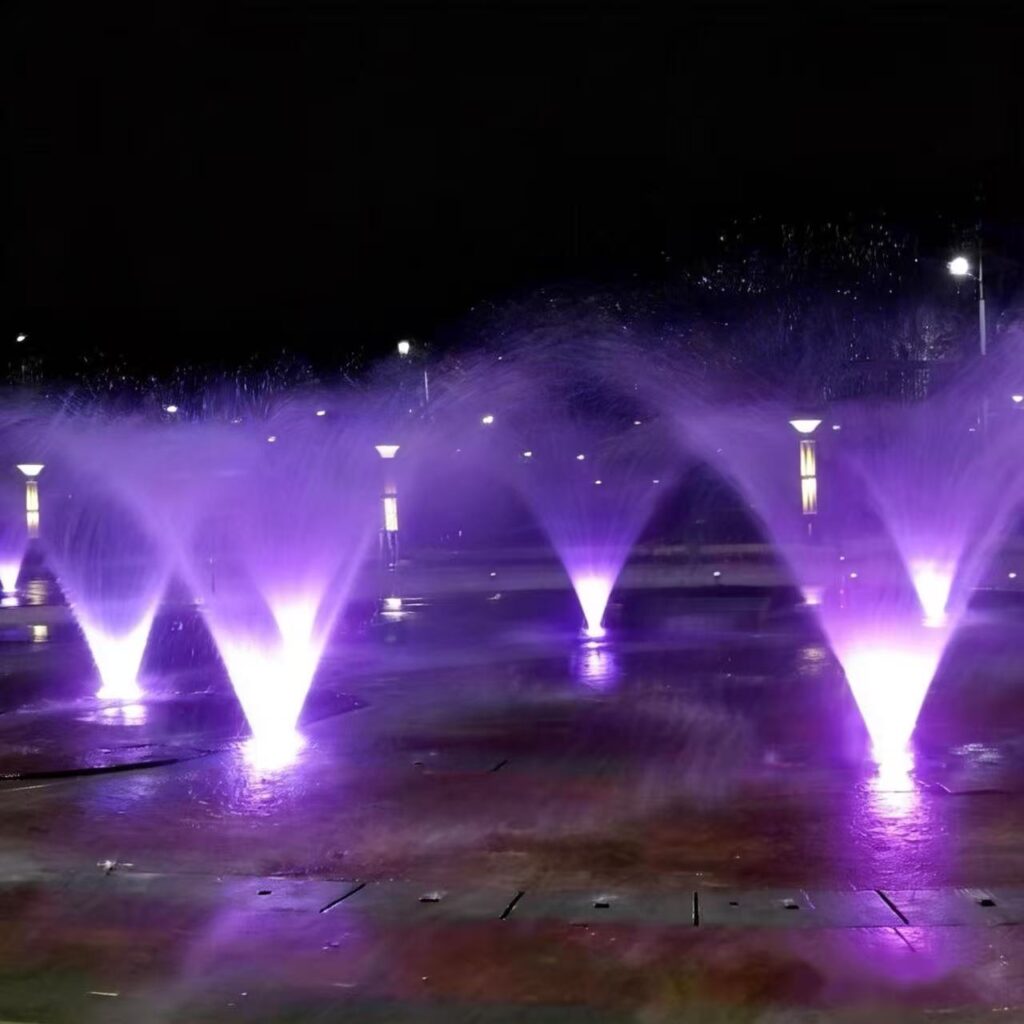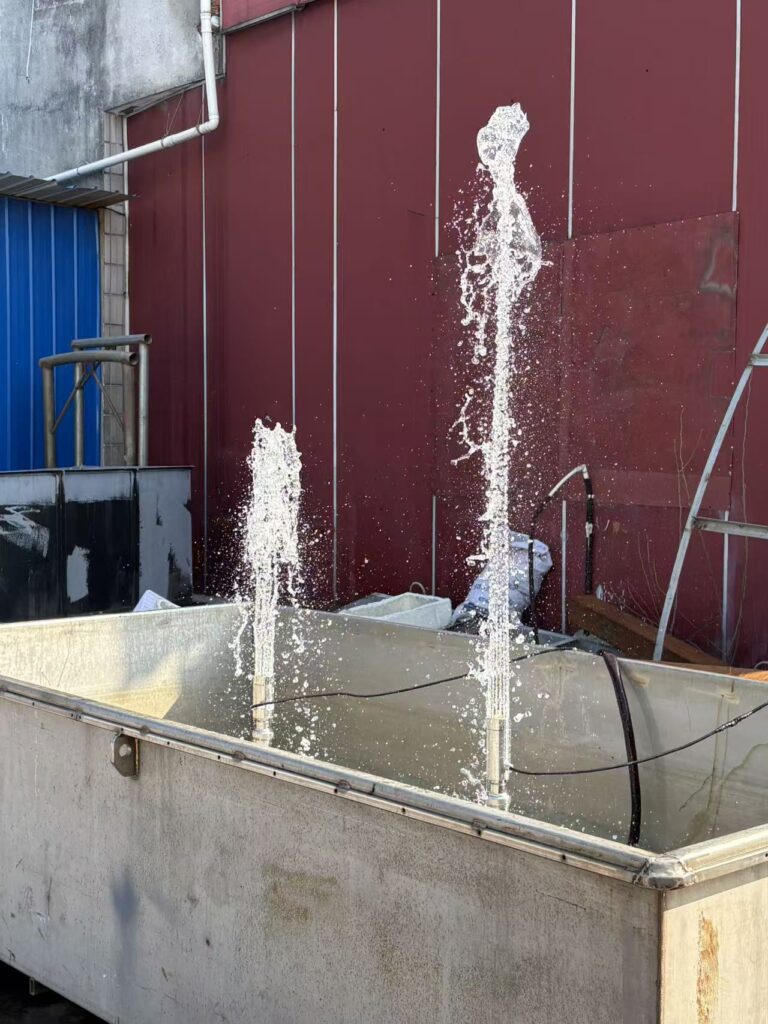
This is the control and debugging of the variable water pattern equipment, mainly testing whether the nozzles and motors can be controlled under control.
Motor drive positioning accuracy: Ensuring the positioning error of the lifting rod to guarantee consistent water pattern switching.
Program stability: Verifying the fault-free operation time during continuous water pattern switching to ensure long-term reliable operation.
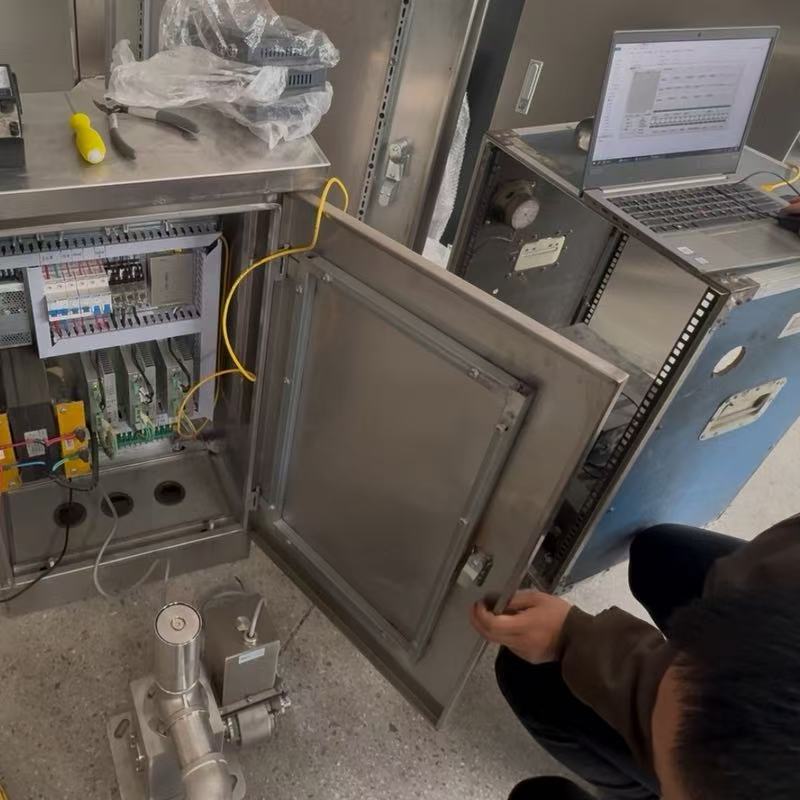
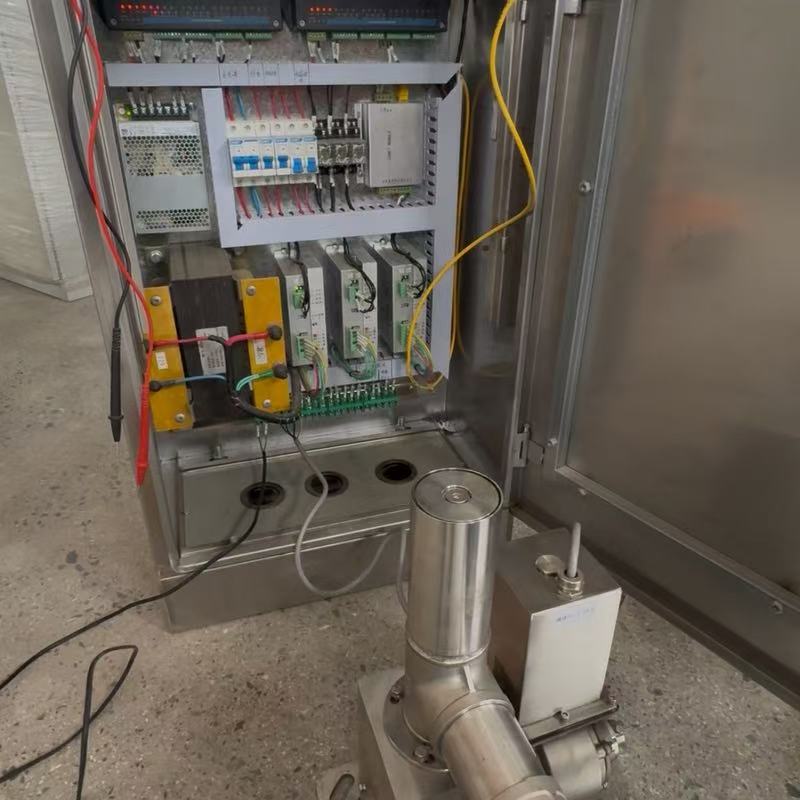
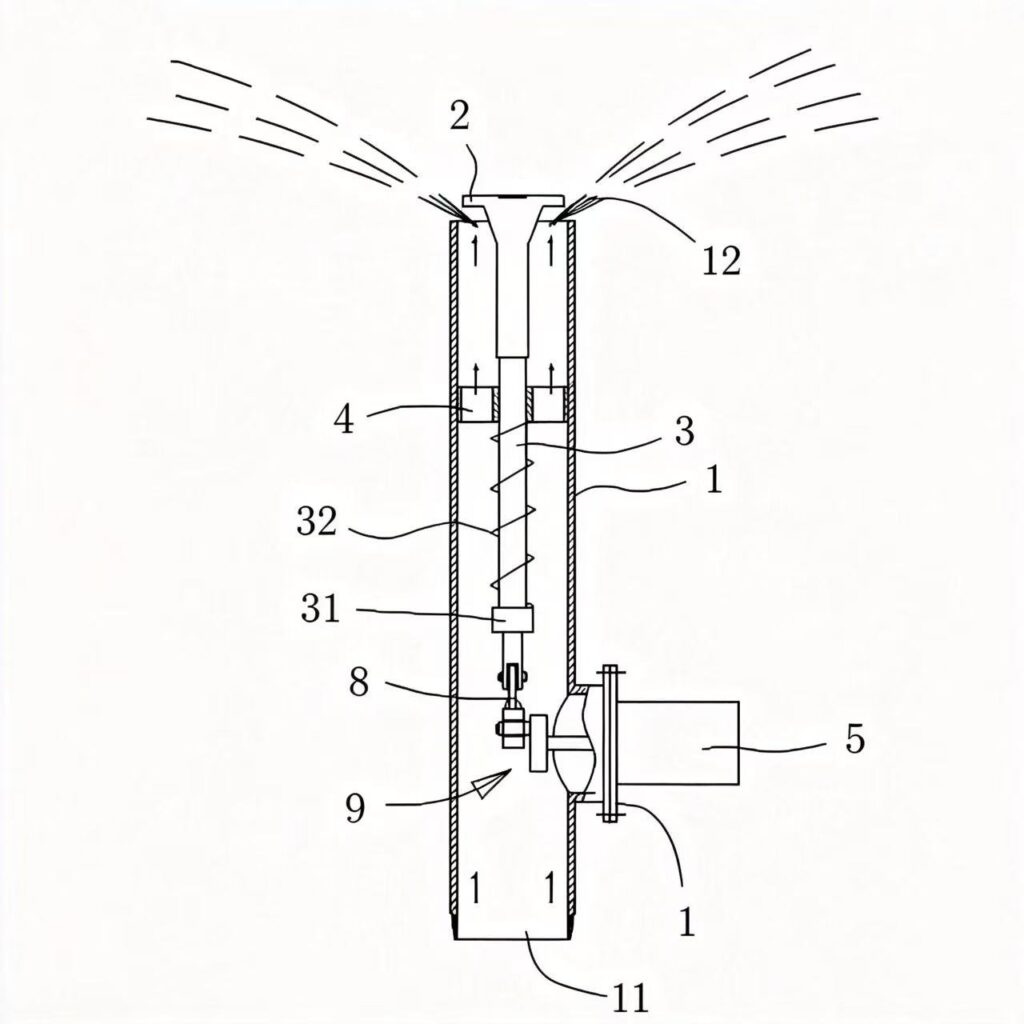
Water Pattern Switching Logic: Water pattern switching is achieved by changing the water outlet cross-sectional area and spray angle.
When the lifting rod rises, the gap between the nozzle cover and the main body increases, releasing water pressure and creating a diffused water pattern (umbrella-like, mist-like).
When the lifting rod descends, the gap narrows, increasing water flow velocity and creating a direct-jet water pattern (column-like, jet-like).
Sealing Design: The seal between the lifting rod and the main body (component 4) uses wear-resistant and water-erosion-resistant rubber, ensuring no leakage during frequent movement while reducing friction loss and extending service life.
Transmission Logic: A servo/stepper motor (component 5) converts rotational motion into linear motion via an eccentric wheel (component 9), driving the lifting rod (component 3) to move up and down. A spring (component 32) resets the rod, causing the gap between the nozzle cover (component 2) at the top of the lifting rod and the nozzle body (component 1) to change accordingly, thus altering the water outlet pattern.